Better Inputs, Smarter Economics: The Case Against Raw Weather Data in AI

How Planalytics WDD® replaces months of manual data engineering with a single, plug-and-play signal that maximizes predictive accuracy while minimizing AI token costs.


A reckoning is underway in corporate AI. After years of enthusiastic adoption, enterprises are confronting a reality that the Wall Street Journal recently put plainly: AI costs are skyrocketing, and companies are beginning to ration usage as annual budgets get consumed in a matter of months. The conversation has shifted from “how do we adopt AI?” to “how do we make our AI investments financially sustainable?”

The answer, increasingly, lies not just in which AI model you choose — but in what data you feed it. For companies in retail, CPG, foodservice, supply chain, and any other sector where weather influences consumer demand, that question has a clear and compelling answer: Planalytics Weather-Driven Demand® (WDD®) signals dramatically outperform raw meteorological data feeds as an AI input. The case rests on three pillars — Accuracy, Reliability, and Cost Efficiency — and the advantages compound across all three.


WeatherAds and Planalytics Announce Strategic Partnership

WeatherAds and Planalytics Announce Strategic Partnership to Deliver the Power of Predictive Weather-Driven Demand® Analytics to Digital Advertisers

WeatherAds, the leading weather-adaptive marketing platform, and Planalytics, the global leader in predictive weather-driven demand analytics, today announced a strategic partnership to provide digital advertisers with a more powerful, science-based approach to weather-triggered advertising.

The collaboration integrates Favorability Indexes, based on Planalytics’ proprietary Weather-Driven Demand® (WDD) analytics, directly into the WeatherAds ecosystem. This enables brands and agencies to automate their digital campaigns—across Google Ads, Meta, TikTok, DV360, SalesForce Marketing Cloud, and more—based not just on the weather itself, but also on how that weather specifically influences consumer purchasing behavior for specific products, and traffic to retail destinations and sites. This optimization enables advertisers to improve key metrics such as ROAS, click-through rates, conversions, and CPMs, while reducing wasted ad spend.

Spring Temperature Whiplash Is Getting Worse With Climate Change

Source: Bloomberg
By Eric Roston and Emma Court 

Abrupt jumps from chilly to warm and back again are typical of the season but becoming more extreme in a warming world.

Dramatic temperature jumps marked this March and April in the US Northeast, making it hard to know what to dress for: chilly or sweltering conditions? Researchers have concluded that wild temperature swings are becoming more common as the world heats up.

That’s changing how we experience spring, with plants blooming sooner and consumers rushing to buy more warm-weather goods earlier in the year…

Easter Outlook

Some Bunny Ordered a Warm Start, Then Rain for Many for Easter Weekend

Egg-Spect a Scramble in Consumer Trends as Weather Shifts Across Regions

The Easter holiday remains a key driver of early spring retail performance. This year, Easter falls on Sunday, April 5, with U.S. consumers expected to spend a record $24.9 billion, according to the National Retail Federation and Prosper Insights & Analytics. As in previous years, candy, food, and gifts remain the most popular planned purchases. Weather conditions during the holiday run-up are expected to create a more variable demand environment this year, with warmer temperatures supporting seasonal activity in many markets even as widespread cloud cover and periods of rain create localized interruptions to trips and foot traffic.

El Niño Is Coming: What This Can Mean For Your Business

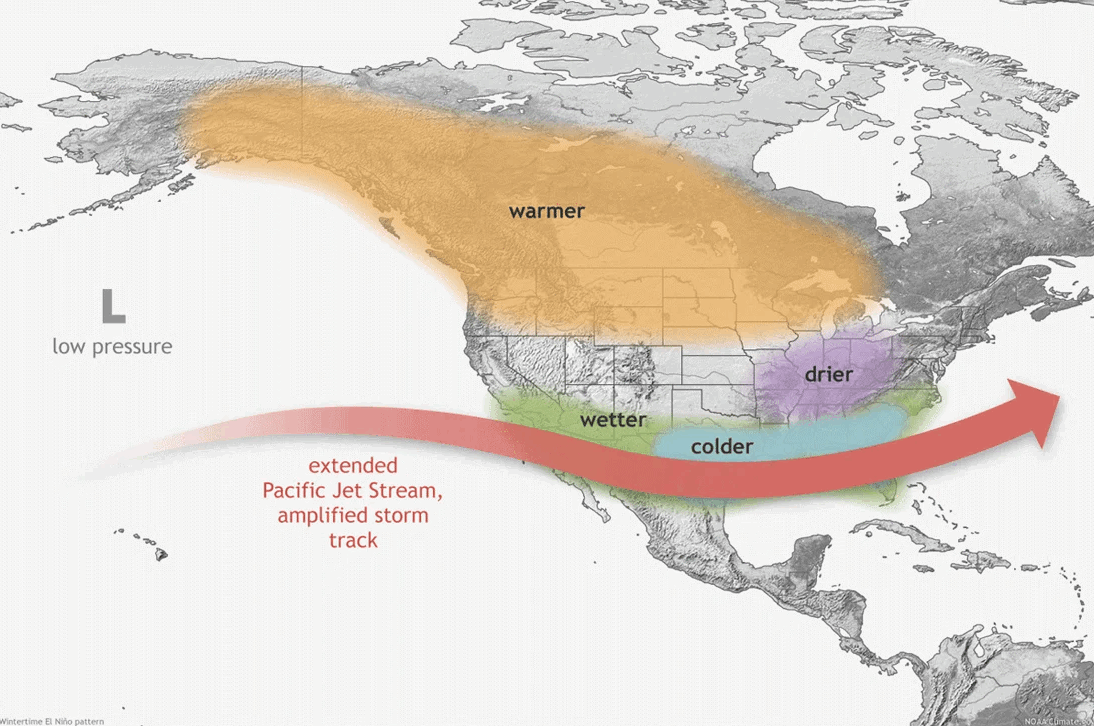
A meaningful climate shift is taking shape that could influence consumer demand through the rest of 2026. Forecasts increasingly point to El Niño developing this summer and strengthening into fall and winter. El Niño is a natural climate pattern characterized by warming of the surface temperatures of the central and eastern tropical Pacific Ocean.

El Niño (and its opposite climatic pattern known as La Niña) often brings volatility to climate and near term weather. Below are the latest thoughts on the current El Niño, along with related business impacts. Planalytics is prepared to support your business, and enable you to proactively meet the corresponding demands of consumers.

Summer

El Niño’s early influence is uneven, leading to inconsistent regional weather patterns. As El Niño develops, businesses can expect:

  • Shorter, less predictable demand bursts
  • Choppier, more volatile performance in weather-sensitive categories such as summer apparel (swimwear, sandals), consumables (sport drinks, suncare), and cooling products (fans, A/Cs).
  • Expect strong weather-driven demand (WDD®) for need-based products when and where extreme heat is present.

Mother’s Day Outlook

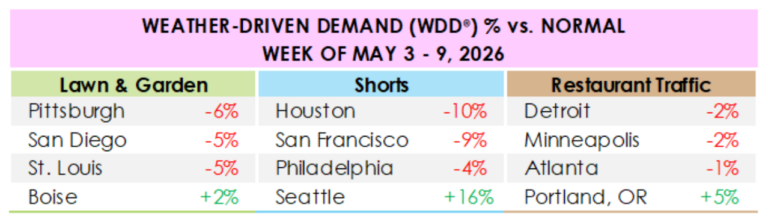
Mother Nature Keeps Things Cool for Mom into Mother’s Day Week.
Cooler temperatures to dampen demand for most with the Northwest having favorable conditions.

It has been a volatile spring to date, with demand for seasonal categories fluctuating across North America. Mother Nature will continue to affect purchasing as loved ones prepare to celebrate Mom this Mother’s Day, Sunday, May 10th.

According to the National Retail Federation (NRF), 84% of U.S. adults are expected to participate in the holiday, with spending expected to reach a record $38 billion this year. Popular gift categories include flowers, dining, apparel, jewelry, and gift cards. As always, weather conditions in the days leading up to the holiday will play a critical role in shaping both timing and category demand.